The Essential Guide to Dolch Sight Words Tracing for 3rd Grade
In the journey of literacy development, third grade stands as a pivotal bridge. Students transition from "learning to read" to "reading to learn," where fluency becomes the foundation for comprehension across all subjects. A powerful, time-tested tool to solidify this fluency is focused practice with Dolch Sight Words. Specifically, the method of Dolch Sight Words tracing offers a multisensory approach that can significantly boost a child's reading confidence and speed. This article explores the purpose, significance, and practical application of Dolch Sight Words tracing activities, particularly for third graders, and how modern resources like dedicated tracing books support this crucial educational goal.
Understanding Dolch Sight Words: The Building Blocks of Reading
To appreciate the value of tracing these words, one must first understand what Dolch Sight Words are. Compiled by Dr. Edward William Dolch in the 1930s, this list comprises the most frequently used words in children's literature. Unlike phonetic words, many sight words do not follow standard decoding rules (e.g., "the," "were," "once"). Therefore, they must be recognized on sight to achieve reading fluency. The 3rd grade Dolch list includes words like "about," "better," "carry," "eight," "light," and "together." Mastery of these words allows a child to read sentences smoothly without stumbling over common yet irregular terms, freeing cognitive energy for understanding the text's meaning.
The Purpose and Significance of Tracing for 3rd Graders
Why is tracing, a seemingly simple activity, so impactful for third-grade students? At this age, writing skills are still being consolidated. Tracing serves a dual purpose:
- Kinesthetic Learning: It engages the hand and muscles, creating a physical memory of the word's shape and letter formation. This motor engagement reinforces visual recognition.
- Orthographic Mapping: This is the cognitive process of forming permanent connections between a word's spelling, pronunciation, and meaning. Tracing while saying the word aloud helps cement these connections in the brain's lexicon.
For a third grader, tracing moves beyond mere letter formation. It becomes an active practice in spelling and memorizing the entire word unit, which is critical for words that cannot be sounded out phonetically. This practice transforms the word from a mysterious string of letters into a familiar, instantly recognizable symbol.
The Modern Educational Tool: The Dolch Sight Words Tracing Book
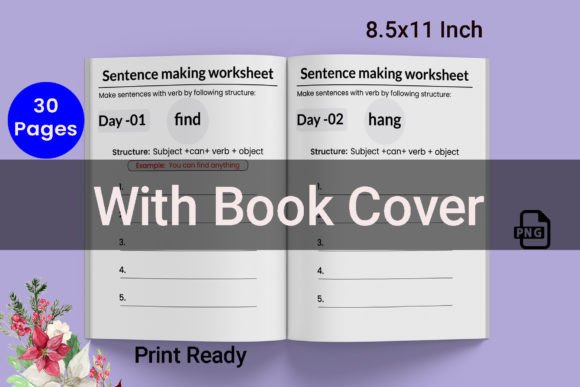
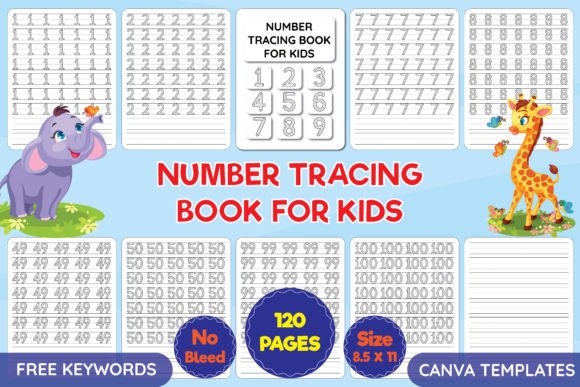
In today's educational landscape, structured resources are key. A dedicated Dolch Sight Words Tracing Book for 3rd Grade provides a systematic, comprehensive, and convenient way for parents, teachers, and homeschoolers to facilitate this practice. Such a book is designed not just as a collection of pages, but as a complete learning interface.
Key Features and Practical Relevance
A well-designed tracing book, ready for market or classroom use, typically includes several important features that speak to its practical relevance:
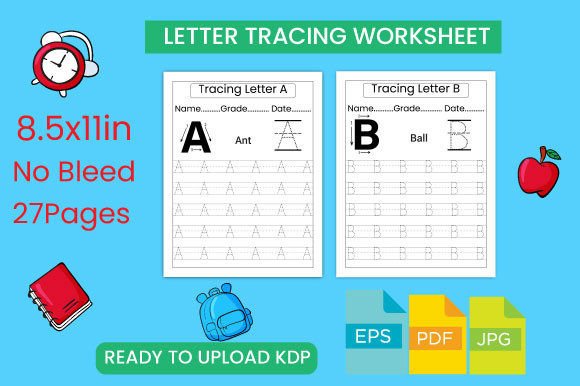
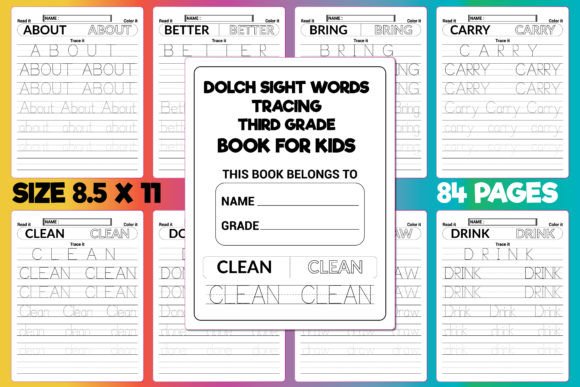
- Dimensions (8.5" x 11" Inches): This standard size offers ample space for comfortable tracing, fits easily into folders and backpacks, and is familiar for young learners.
- Page Count (e.g., 84 Pages): This provides substantial practice material, covering all 3rd grade Dolch words multiple times with varied exercises, ensuring thorough reinforcement without monotony.
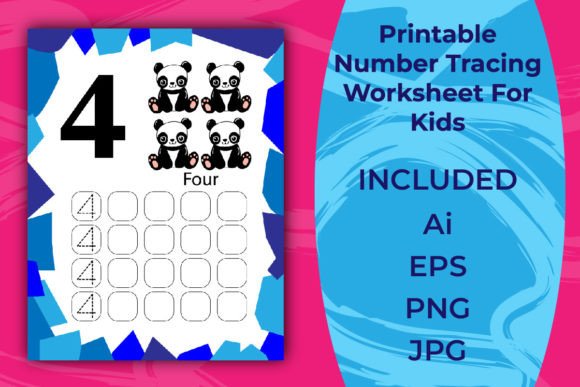
- No Bleed & High-Quality Files (JPEG, PNG, PDF): These technical specifications ensure the product is high-quality print-ready. "No Bleed" means content stays within safe margins, perfect for bound books. High-resolution files allow for crisp, clear letterforms, which is essential for accurate tracing. The print-ready PDF format makes it exceptionally easy for educators to use or for creators to upload to KDP (Kindle Direct Publishing) and other platforms, bridging educational need with modern self-publishing technology.
Such a book fits seamlessly into modern educational routines. It can be used as a daily warm-up in the classroom, a focused homework assignment, or a supplemental activity for summer learning. It supports differentiated instruction, allowing struggling readers to gain confidence and fluent readers to solidify their automaticity.
Clarifying Common Misunderstandings
There are a few common assumptions about sight word tracing that deserve clarification:
- "Tracing is Only for Younger Children": While tracing is foundational in pre-K and kindergarten, its utility in third grade is strategic. It targets spelling memorization and fluency acceleration for more complex, irregular words, not just letter introduction.
- "It's Just a Writing Activity": Effective tracing practice is integrated. It should combine visual (seeing the word), auditory (saying the word), and kinesthetic (tracing the word) channels. The goal is reading fluency, not just penmanship.
- "All Sight Word Practice is the Same": Flashcard drilling and tracing serve different, complementary functions. Flashcards test recognition speed; tracing builds deep orthographic mapping and spelling competence.
Building a Broader Understanding: Beyond the Page
The practice of tracing Dolch Sight Words extends its benefits into broader academic and life skills. As students become more fluent readers, they experience:
- Enhanced Comprehension: Less effort on decoding means more mental capacity for understanding plot, following instructions in science, or solving word problems in math.
- Increased Confidence: Successfully reading texts without frequent pauses builds a positive self-image as a "good reader," encouraging more reading engagement.
- Improved Writing: Knowing these high-frequency words by heart allows students to use them correctly and effortlessly in their own writing, improving composition flow and accuracy.
In the context of technology and daily activities, this foundational literacy skill is non-negotiable. From reading menus, game instructions, and website content to eventually crafting emails and reports, instant word recognition is a cornerstone of functional modern life.
Creating a Market-Ready Resource: The Cover and Keywords
For those looking to create or utilize such a tracing book, the final steps involve presentation and discoverability. A compelling, professionally designed cover is crucial. It should be vibrant, child-friendly, and clearly communicate the grade level and core activity ("Tracing"). This visual appeal motivates the learner and assures the purchaser of the product's quality.
Equally important are free high-score keywords for online marketing and search. These might include phrases like: "third grade sight words practice," "Dolch words printable," "reading fluency workbook," "homeschool spelling activity," "printable tracing worksheets," and "KDP interiors for education." Using these keywords naturally in descriptions helps connect this valuable resource with the parents, teachers, and tutors actively searching for solutions to boost their child's reading journey.
In conclusion, Dolch Sight Words tracing for 3rd grade is not a retrogressive exercise but a targeted, multisensory strategy to master the linguistic glue that holds English text together. By investing time in this focused practice, supported by high-quality, purpose-built materials, we equip young learners with the fluency they need to cross the bridge from reading mechanics to true reading for knowledge, pleasure, and lifelong success.