The Essential Guide to Number Tracing for Young Learners: Building Foundational Skills
In the vibrant journey of early childhood development, the acquisition of basic numeracy and fine motor skills forms a cornerstone of future learning. For parents, caregivers, and educators of toddlers, preschoolers, and children aged three, four, and five, introducing these concepts in a fun, structured, and stress-free manner is paramount. Among the most effective and beloved tools for this purpose are number tracing activities and printable worksheets. These resources are not merely about writing numbers; they are a holistic approach to cognitive development, handwriting readiness, and the joyful introduction to the world of mathematics.
Understanding Number Tracing: More Than Just Lines on Paper
Number tracing, at its core, is the guided practice of writing numerals by following a predefined path, typically a dashed or dotted outline. This simple activity, however, is a powerful multisensory learning experience. It integrates visual guidance (seeing the number shape), kinesthetic action (the movement of the hand and fingers), and cognitive processing (understanding the symbol’s meaning). For a young child, successfully tracing the curve of a ‘2’ or the straight lines of a ‘4’ is a significant achievement that builds confidence and self-efficacy.
The purpose extends far beyond penmanship. It serves as a bridge between recognizing a number and being able to reproduce it independently. This is a critical step in encoding knowledge, moving from passive understanding to active creation. In the context of modern early childhood education, which emphasizes play-based and developmentally appropriate practice, tracing offers a perfect blend of structure and creativity. It provides a clear goal while allowing children to engage at their own pace.
The Significance for Developmental Milestones
The ages of three to five are a period of rapid neurological and physical growth. Number tracing worksheets are uniquely suited to support key developmental areas:
- Fine Motor Skills & Hand-Eye Coordination: Controlling a pencil or crayon to stay within the lines strengthens the small muscles in the hands and fingers. This dexterity is essential not only for writing but for everyday tasks like buttoning clothes and using utensils.
- Cognitive Recognition & Memory: Repeated tracing reinforces the visual pattern of each numeral. Children begin to memorize the unique form of ‘1’, ‘3’, ‘7’, and others, laying the groundwork for quick number identification.
- Pre-Writing & Handwriting Foundation: Tracing teaches the basic strokes that compose all letters and numbers: vertical lines, horizontal lines, circles, and curves. It is the fundamental practice that leads to fluent handwriting later on.
- Early Math Literacy: Associating the traced symbol with its name and, eventually, its quantity (“this is ‘4’, and it means four apples”) builds early numeracy concepts. It turns an abstract symbol into a meaningful part of their world.
The Practical Relevance: From Home Practice to Classroom Core
In daily life, these resources offer unparalleled flexibility. A parent can print a single worksheet for a quiet afternoon activity. A preschool teacher can incorporate them into a weekly math center. They fit seamlessly into modern routines, whether as a focused learning session or a creative alternative to screen time. For the child, it’s a fun “game.” For the adult, it’s a purposeful, educational engagement.
Their practical relevance is also evident in how they prepare children for the structured environment of kindergarten. The ability to recognize and tentatively write numbers eases the transition to more formal math instruction. It reduces anxiety and builds a “can-do” attitude towards academic tasks. Furthermore, in our technology-driven age, the tactile experience of holding a pencil and feeling paper provides a crucial sensory balance to digital interactions.
Clarifying Common Assumptions
One common misunderstanding is that tracing is too rigid or stifles creativity. In reality, when designed well, these activities are a form of guided creativity. The structure provides security and clarity, freeing the child to focus on mastery without the frustration of “not knowing how to start.” Another assumption is that it’s only for children who are “ready to write.” However, tracing is often the precursor to writing, not a consequence of it. It is the training ground that develops readiness itself.
It’s also important to note that success in tracing is not about perfection. Wobbly lines and occasional stray marks are part of the learning process. The goal is engagement and gradual improvement, not a flawless replica. Celebrating the effort and the attempt fosters a positive learning mindset far more valuable than a perfect worksheet.
Number Tracing Worksheets as a High-Quality Educational Product
For entrepreneurs and creators in the educational space, such as those running a KDP (Kindle Direct Publishing) business, offering premium number tracing resources meets a clear market need. Parents and educators actively seek out well-designed materials that are both effective and appealing to children. A superior product, like the one described, emphasizes several key features that align with SEO and user-centric principles like E-E-A-T (Experience, Expertise, Authoritativeness, Trustworthiness):
- Age-Appropriate Design: Worksheets tailored for three, four, and five-year-olds use simple, clear fonts and ample spacing, respecting the child’s visual and motor capabilities.
- High-Quality Crystal Clear Lines: Crisp, distinct tracing paths prevent confusion and allow children to easily follow the guide. This is a direct reflection of the creator’s expertise and attention to detail.
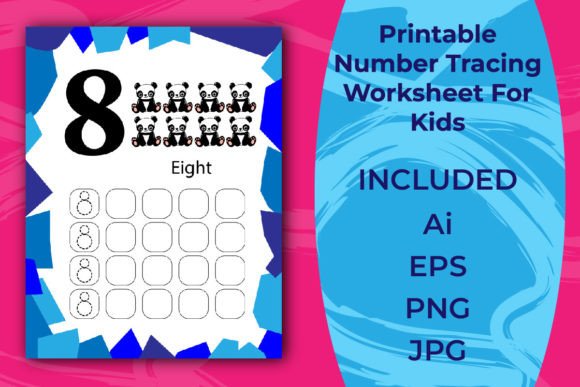
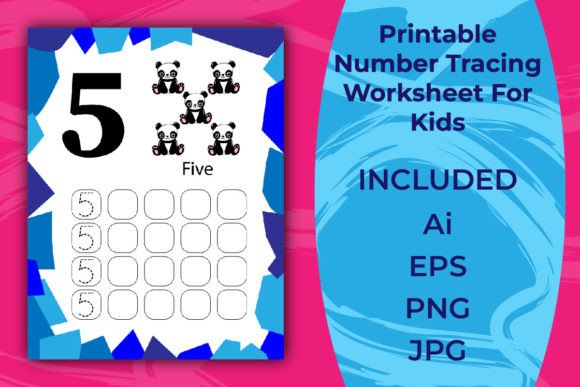
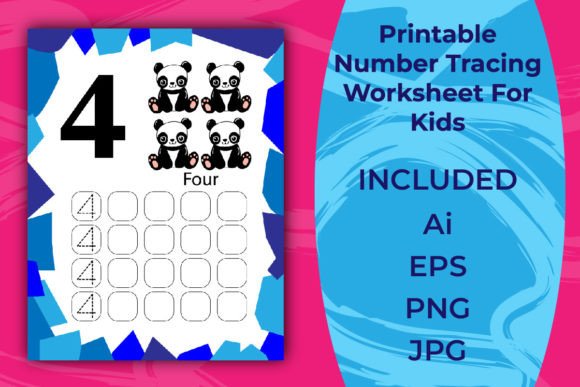
- Engaging, High-Quality Illustrations: Incorporating friendly, relevant graphics (like animals, stars, or toys) next to the numbers adds context and fun, transforming a practice sheet into a mini-adventure.
- Technical Readiness: Specifications like 8.5 x 11 dimensions, 300 DPI resolution, and compatibility with Amazon KDP ensure the product is practical and professionally viable for the buyer. Mentioning a fully tested interior builds trust.
- Versatile File Formats: Providing a ZIP file with Ai, EPS, JPG, and PNG formats offers immense value. It allows educators to print directly (JPG, PNG) and designers or resellers to customize and scale (Ai, EPS), broadening the product’s application and relevance.
Building a Broader Understanding: Integrating Tracing into Holistic Learning
To maximize benefit, number tracing should not stand alone. It can be beautifully integrated into a broader learning framework:
- Connect to Counting: After tracing the number ‘5’, have the child count out five blocks or color five objects on the page. This links the symbol to its quantitative meaning.
- Incorporate Sensory Play: Before using a pencil, trace the number in sand, with playdough, or using a finger on a textured surface. This multisensory approach deepens neural pathways.
- Progress Gradually: Start with simple numerals (1, 4, 7) that use mostly straight lines, then move to more complex curves (2, 3, 8). This scaffolds the learning process.
- Celebrate and Display: The child’s completed worksheet is a work of art and effort. Displaying it reinforces their pride and accomplishment, motivating further practice.
In the realms of creativity and technology, these printable resources represent a harmonious blend. They are a creative output for the designer, a creative task for the child, and a physical product that can be digitally distributed globally via platforms like Amazon. They support educational goals while being a viable component of a modern, niche business.
Conclusion: A Simple Tool for Profound Growth
Number tracing for kids, embodied in high-quality printable worksheets, is far more than a simple activity sheet. It is a thoughtfully crafted educational instrument that supports critical developmental milestones in early childhood. It builds the fine motor and cognitive foundations necessary for academic success while fostering confidence and a positive attitude towards learning. For the general reader—whether a parent seeking effective tools, an educator curating resources, or an entrepreneur understanding market needs—recognizing the depth and versatility of this tool is key. It fits into the daily rhythm of life with young children, serves as a core practice in preschool settings, and stands as a trustworthy, valuable product in the educational marketplace. By starting with clear lines and friendly numbers, we open a path for children to trace their way towards greater knowledge, skill, and joy in learning.