The Essential Guide to Alphabet Letter Tracing Worksheets: Building Literacy from the Ground Up
In the journey of early childhood education, few tools are as foundational and timeless as the alphabet letter tracing worksheet. At its core, a set of Letters Tracing Alphabet Worksheets is a collection of black and white educational pages designed to guide children through the shapes and forms of each letter, from A to Z. This simple, purposeful activity is more than just drawing lines; it is a critical step in developing the fine motor skills, cognitive recognition, and muscle memory necessary for writing and reading. For parents, educators, and caregivers, understanding the purpose, design, and application of these worksheets can unlock a powerful method for nurturing young learners.
Understanding the Anatomy of a Tracing Worksheet Package
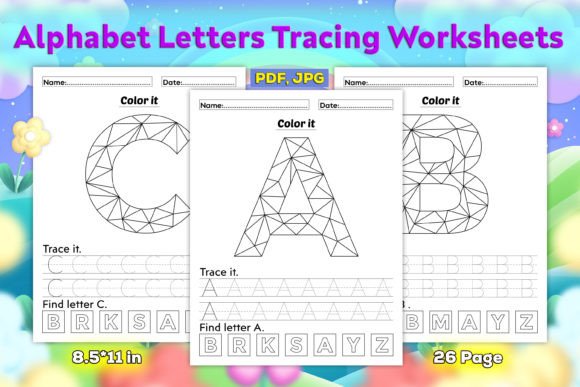
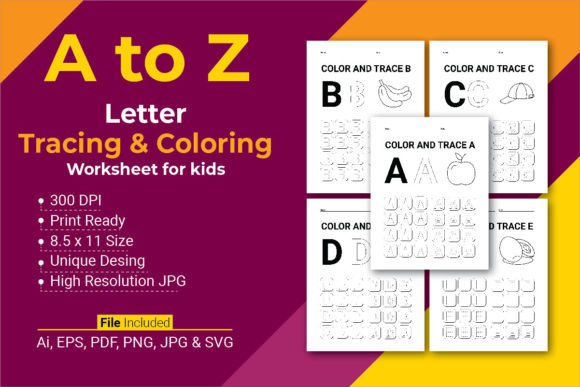
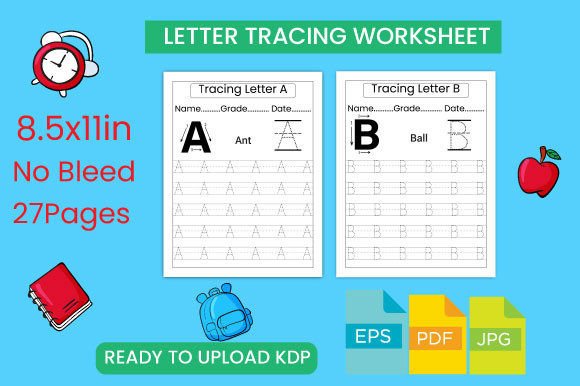
A typical professional worksheet package, as described, is a comprehensive digital resource. It often includes a 27-page PDF file ready for immediate printing, ensuring each uppercase letter—and often a starting page—is covered. The inclusion of high-quality 300 DPI JPG files allows for clear, crisp prints at home on standard printers, while an editable PowerPoint file offers flexibility for educators who wish to customize or emphasize certain letters. Designed for the standard 8.5 x 11 inches page size, these materials are built for practicality and ease of use.
This structure is intentional. The black and white format isn't merely for simplicity; it reduces ink consumption and focuses the child's attention solely on the form of the letter, free from distracting colors or backgrounds. The clear, bold lines of the traceable letter provide a unambiguous path for the child's pencil or crayon to follow.
The Core Purpose: Why Tracing Comes First
Before a child can write freely, they must understand the blueprint. Alphabet tracing serves several interconnected purposes:
- Motor Skill Development: Controlling a writing tool to stay within the lines of a 'B' or a 'M' requires precise hand-eye coordination and fine muscle control. This repetitive practice builds the dexterity needed for all future writing.
- Letter Shape Recognition: Tracing reinforces the visual identity of each letter. By physically engaging with its shape, a child begins to internalize the differences between a circular 'O' and a angular 'V', moving beyond passive seeing to active knowing.
- Establishing Correct Stroke Patterns: Many worksheets are designed with numbered dots or directional arrows, subtly teaching the proper order and direction of strokes—a crucial habit for efficient and legible handwriting later.
- Building Confidence: Completing a traced letter provides a clear, achievable success. This positive reinforcement encourages continued practice and reduces the anxiety associated with blank-page writing.
The Modern Relevance of Tracing in Education and Business
In our digital age, the significance of handwriting fundamentals might be questioned, yet its relevance is enduring. Tracing worksheets fit seamlessly into modern educational frameworks, from homeschooling curricula to preschool classroom activities. They are a tangible, screen-free learning tool that complements digital apps and games, providing a necessary tactile experience.
For creative entrepreneurs, especially in the KDP (Kindle Direct Publishing) Interior market, these worksheet packages represent a valuable product niche. Parents and teachers actively seek out high-quality, ready-to-use resources to support learning at home. A well-designed Alphabet Letters Tracing Book serves as a perfect "print-on-demand" interior for a physical workbook or a downloadable product. This bridges the gap between educational need and accessible, affordable teaching materials.
Practical Applications and Use Cases
The described package highlights its Perfect Use For, which spans multiple contexts:
- Home Printing & Practice: The primary use. Parents can systematically introduce letters, creating a consistent home-learning routine.
- KDP Interior Alphabet Letters Tracing Book: As a core content block for self-published educational workbooks.
- Teaching Materials: For preschool and kindergarten teachers, these sheets are reusable, scalable resources for whole-class or individual instruction.
- Alphabet Tracing Worksheet & Letters Tracing Book Activity for Kids: A structured activity during daycare, after-school programs, or library learning circles.
- Developing Writing Skills & ABC Handwriting Workbook: The foundational component of a broader handwriting curriculum, often used before moving to lowercase letters or free-form writing.
Clarifying Common Misunderstandings
Some may view tracing as a mere "drawing" activity or assume it's only for children who are already interested in writing. This overlooks its strategic role. Tracing is not about artistry; it is about kinesthetic learning—learning through physical movement. It is also a diagnostic tool; a child struggling to trace a particular letter's curves may need additional fine motor support, revealing needs that free writing might not expose.
Another assumption is that tracing is a one-time activity. In practice, effective use involves repetition across days and weeks. The goal is not perfection on the first try, but the gradual improvement of control and recall, eventually leading to the ability to reproduce the letter without the guiding lines—true mastery.
Integrating Tracing into a Holistic Learning Approach
The most effective use of Alphabet Tracing Worksheets comes when they are part of a richer literacy experience. For example, while a child traces the letter 'D', a parent might discuss the sound it makes, point to a "Dog" in a picture book, or find objects around the house that start with 'D'. This connects the mechanical skill to phonics and real-world meaning, building a broader understanding of the alphabet's role in communication.
Technology can play a supportive role here. While the worksheet itself is analog, the editable PowerPoint file allows a teacher to quickly create themed sheets—tracing letters alongside images of animals for a zoo theme, for instance—blending traditional method with modern customization ease.
The Enduring Significance of a Foundational Skill
From the classroom to the home office of a KDP publisher, alphabet letter tracing worksheets remain a vital link in the chain of literacy development. They represent a moment where physical action meets cognitive growth, where a simple line on paper becomes part of the map to reading and writing. By providing a clear, structured, and adaptable path for learning letter forms, these collections of educational pages do more than teach shapes; they build the confidence and capability that empower a child's first steps into the world of words. Whether as a teaching material, a business product, or a parent's resource, their value lies in their perfect focus on the essential: making the complex system of the alphabet accessible, tangible, and masterable for every young learner.