The Cursive Handwriting Workbook 3 in 1: A Practical Resource for Skill Development
The act of writing in cursive is more than a nostalgic skill; it is a focused, tactile process that engages the mind in a distinct way. For adults, educators, and parents seeking to teach or relearn this art, the process requires structured, effective materials. The Cursive Handwriting Workbook 3 in 1 serves as a core asset in this workflow, designed not as a casual activity book but as a comprehensive practice system. Its tripartite focus on letters, numbers, and vocabulary provides a logical progression for building proficiency, making it a valuable tool in any educational or personal development plan.
Integrating the Workbook into a Learning or Teaching Process
Whether you are an educator designing a classroom curriculum, a parent supporting homeschool activities, or an adult pursuing personal improvement, the integration of a resource like the Cursive Handwriting Workbook 3 in 1 should be deliberate. Its use fits naturally after foundational decisions about learning objectives have been made. Before introducing the workbook, assess the learner’s starting point. For complete beginners, the workbook's sequential design—starting with letter tracing—provides the necessary scaffold. For those with some experience, its sections on numbers and names of things offer a path to applied practice, preventing skill stagnation.
This workbook interacts directly with other elements of a learning environment. It complements digital learning tools by offering essential offline, hands-on practice. For educators, it can be paired with lesson plans that explain the historical or practical value of cursive writing. For creators or entrepreneurs involved in designing educational products, the workbook’s ready-to-use interior files (the included PDF and JPGs) act as a compatible, high-quality component that can be incorporated into larger projects or branded offerings without requiring extensive graphic design work.
Structure and Usability: A Closer Look at the Workflow Asset
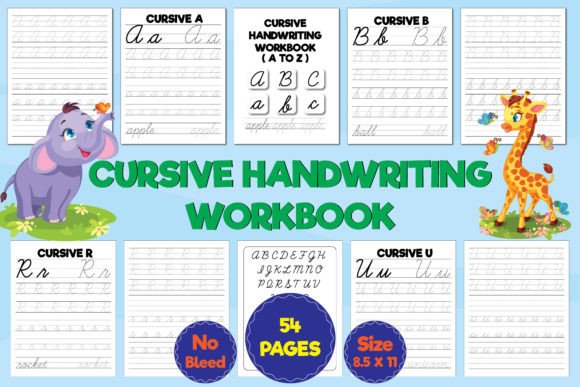
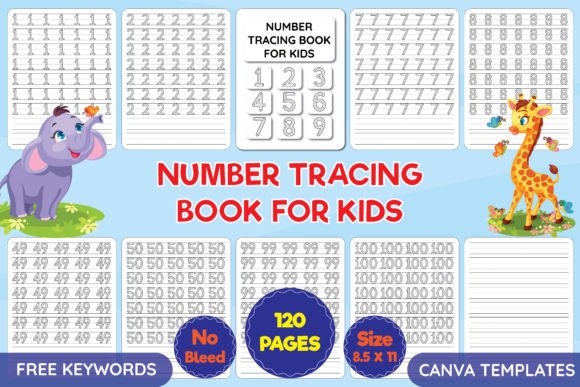
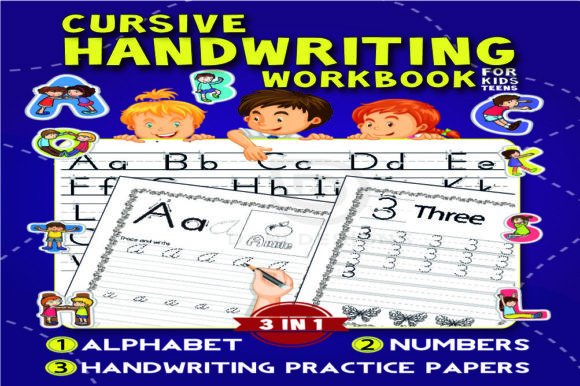
The workbook’s internal structure is built for progressive skill acquisition. The 3 in 1 approach—letters, numbers, names of things—creates a clear three-phase workflow for the user. This isn't a random collection of exercises; it’s a process-oriented layout. The initial letter tracing phase establishes muscle memory and form recognition. The number section expands the application of cursive strokes to a different symbol set, reinforcing adaptability. Finally, writing "names of things" transitions the learner from abstract symbols to concrete, everyday words, building confidence for practical use.
Usability features are tailored for effective practice. The 8.5 x 11 inch large size and abundant practice pages address a common bottleneck in skill development: insufficient space for repetition. This design choice directly impacts the quality and consistency of the learner’s output. The inclusion of blank lined pages is a critical feature for the later stages of the workflow, allowing for unprompted practice, self-assessment, or the integration of custom word lists tailored to a specific learner’s interests or professional needs.
Preparation and Long-Term Application
For the facilitator—teacher, parent, or self-directed learner—preparation with this resource is straightforward. The 96-page length offers a substantial runway for sustained practice, making it suitable for a semester-long plan or a multi-month personal goal. Its compatibility with standard printing and binding processes (highlighted by the KDP-ready interior files) means that for small business owners or content creators, it can be reliably produced or rebranded as part of a physical product line without compatibility concerns.
Long-term use is supported by the workbook’s comprehensive scope. Unlike single-focus books, its three integrated sections prevent the need for switching resources mid-process, maintaining organizational efficiency. After completing the structured pages, the blank sections serve as an ongoing tool for quality control, where the learner can periodically return to practice and monitor the consistency of their penmanship over time. This makes the workbook a durable asset, not a disposable one.
Practical Implementation for Different User Groups
The implementation of the Cursive Handwriting Workbook 3 in 1 varies based on the user's role and goals. For educators and bloggers creating educational content, the workbook can serve as the core practice material for a series of blog posts or video tutorials. The workflow could involve introducing a lesson concept, then directing followers to the specific tracing or practice page that reinforces that lesson. The ready-to-use JPG files allow for easy extraction of individual pages for digital worksheets or social media content.
For professionals, parents, or hobbyists focused on direct skill transfer, implementation is more personal. A recommended workflow is scheduled, focused sessions. For example, dedicate 15-minute daily sessions to one section at a time, using the plentiful practice space to repeat exercises until mastery is felt. The process benefits from pairing the workbook with quality writing instruments and a dedicated notebook for notes on personal challenges or improvements, creating a holistic learning system.
For entrepreneurs and publishers in the educational niche, this workbook represents a turnkey product component. Its KDP-ready interior simplifies the production workflow. After market research and niche selection, this PDF can be integrated into a broader publishing plan with minimal adaptation. It interacts with decisions about cover design, marketing copy, and pricing, serving as the consistent, quality-controlled interior that forms the product's foundation.
Observations on Efficiency and Outcomes
Using a unified resource like this workbook increases efficiency by centralizing practice materials. The learner or instructor isn’t juggling multiple books for letters, numbers, and words. This consolidation reduces administrative overhead and keeps the learning trajectory clear. The outcome of this integrated approach is a more seamless skill development curve, where progress in one area directly reinforces another.
A key observation is that the workbook’s value is unlocked through consistent application, not just possession. Its design facilitates that consistency. The multitude of practice pages eliminates the excuse of "running out of space," and the logical progression reduces decision fatigue about "what to practice next." This allows the user to focus purely on the execution of writing, which is where true skill advancement happens.
Smooth Integration into Routines and Projects
To integrate this workbook smoothly, view it as a module within a larger system. For a classroom, it is the practice module following instruction. For a self-improvement project, it is the daily drill module within a broader plan that might include studying cursive style variations or setting specific goals like writing a letter. For a publishing business, it is the content module within a product development workflow that includes design, upload, and marketing.
Compatibility with common goals is high. The workbook supports goals ranging from "help my child learn cursive" to "create a supplemental income stream through KDP publishing" to "improve my own handwriting for journaling or signature elegance." The practical tip for all users is to align the workbook's use with a specific, measurable outcome. Track progress through the pages, use the blank pages for tests, and consider the workbook complete only when the skills transfer fluently to unprompted writing on plain paper—the ultimate test of integration.
Ultimately, the Cursive Handwriting Workbook 3 in 1 is a tool designed for execution. Its structure guides the process, its features support consistent practice, and its format allows for versatile use across different contexts. By treating it as a core component in a deliberate skill-building or product-creation workflow, users can maximize its utility and achieve tangible results in the art of penmanship.