Amateur Radio Station Log Book KDP Interior: An Evaluation for Publishers
For entrepreneurs in the Kindle Direct Publishing (KDP) space, finding reliable and high-quality interior files is a crucial step in creating low-content books. One such product is the Amateur Radio Station Log Book KDP Interior. This is a pre-designed, editable template specifically formatted for amateur radio logbooks. It is marketed as a tested, ready-to-upload solution for KDP, aiming to streamline the publishing process for this niche.
What This Product Offers
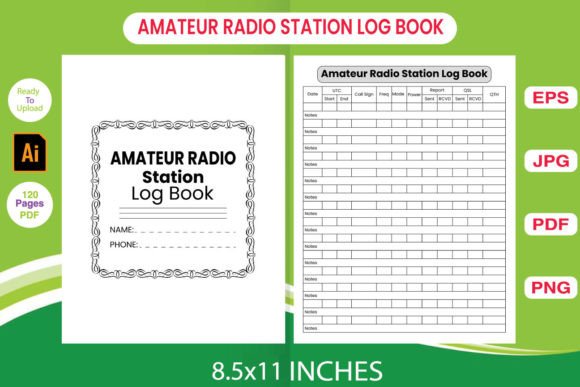
The Amateur Radio Station Log Book KDP Interior is a digital product bundle. It provides the core interior pages for a logbook, which radio operators use to record station details, contact information, and technical notes. The package typically includes multiple file formats: a print-ready PDF, editable vector files (EPS for Adobe Illustrator), PNG images with transparent backgrounds, and high-resolution JPG files. Key specifications often listed are a trim size of 8.5 by 11 inches, 300 DPI quality, and no bleed settings. The product emphasizes that it has been tested on Amazon's KDP platform to ensure it meets technical requirements.
Potential Benefits for KDP Publishers
For individuals looking to publish in the amateur radio niche, this interior template presents several practical advantages.
- Time Efficiency: It eliminates the need to design page layouts, create tables for logging, or handle formatting from scratch. This can significantly speed up the production cycle.
- Technical Assurance: The claim of being "KDP tested" suggests the files have passed Amazon's review for dimensions, resolution, and margins, reducing the risk of upload rejection or print quality issues.
- Flexibility: Offering editable EPS vector files is a notable feature. This allows publishers with access to design software like Adobe Illustrator to resize the entire interior, modify elements, or customize colors without losing quality, potentially adapting the logbook for different trim sizes or personal branding.
- Niche Targeting: It serves a specific, established hobbyist community. Amateur radio operators are accustomed to maintaining station logs, making this a well-defined low-content book category with clear utility.
Tradeoffs and Considerations
While the benefits are clear, a balanced evaluation requires examining the tradeoffs and important considerations.
First, the product is a template. Its success depends on the publisher's ability to effectively use the provided files. Individuals without experience with vector editing software may find the EPS files challenging to modify, limiting them to the static PDF version. The design aesthetic and layout are fixed; if market trends shift or a publisher desires a unique look, customization effort is required.
Second, the focus is solely on the interior. A publisher must still source or create a compelling cover design, write a suitable book description, and handle marketing. This product does not complete the entire book package.
Third, the amateur radio market is niche. While this reduces direct competition compared to broader journals, it also limits the total addressable market. Sales potential depends deeply on understanding and reaching that specific audience.
Finally, the claim of being "KDP tested" should be understood as the seller's verification. It does not guarantee Amazon will accept every subsequent upload, as issues can arise from how the publisher finalizes and submits the files.
When This Interior Is a Strong Fit
The Amateur Radio Station Log Book KDP Interior may be an excellent choice for certain publishers.
- New Publishers in the Niche: Someone entering the KDP market with an interest in amateur radio topics but lacking graphic design skills could use this as a foundational, compliant product to launch their first title quickly.
- Publishing Scalability: For a publisher aiming to release multiple variations (e.g., 100-page, 110-page, 120-page versions as often listed), having an editable vector interior allows for efficient generation of these derivatives.
- Focus on Production Speed: If the primary business goal is to expand a catalog of low-content books rapidly, using pre-tested interiors for reliable niches can be a logical tactic.
Situations Where Alternatives Might Be Preferable
Other paths might be more suitable depending on a publisher's resources, skills, and goals.
If a publisher possesses strong design skills using tools like Canva, Affinity Designer, or even Microsoft Word, they might choose to create a custom interior from scratch. This allows for full creative control, differentiation from competitors, and possibly lower upfront costs, though it invests more time.
Another alternative is using simpler, non-editable PDF interiors from other sources if customization is not a need. However, this can lock the publisher into a single format.
For publishers uninterested in the amateur radio niche altogether, this specific product is obviously not relevant. They should seek templates aligned with their chosen topics, such as gardening journals, fitness planners, or business notebooks.
Finally, if a publisher's strategy is to build a highly branded, cohesive line of books, investing in original, unique interiors for all titles might be a better long-term decision than using a generic template, even an editable one.
Practical Decision-Making Insights
To determine if the Amateur Radio Station Log Book KDP Interior aligns with your needs, consider these questions.
- Do you have a genuine understanding of the amateur radio audience and their need for a logbook?
- Do you have access to, and basic proficiency with, vector editing software to leverage the EPS files, or will you use the PDF as-is?
- Is your immediate priority speed to market and technical compliance over unique design?
- Does your business model include creating multiple page-count versions of the same logbook theme?
- Have you budgeted for and planned the additional tasks of cover design, listing optimization, and marketing?
Evaluating this product is not about whether it is "good" in absolute terms, but whether it efficiently solves a specific problem for your publishing workflow. It serves as a potential tool to reduce the design and formatting hurdle for a niche low-content book. Success ultimately hinges on how you integrate it into a complete publishing strategy that includes market research, effective listing, and audience engagement. For the right publisher, it can be a helpful component. For others, it may represent an unnecessary constraint or a mismatch for their creative or business objectives.