Why a Professional Recipe Meal Planner Log Book KDP Interior Saves Time and Elevates Your Project
If you're creating a physical meal planner or recipe journal to sell or use yourself, you've likely discovered that designing the interior pages is a massive undertaking. This is where a professionally designed Recipe Meal Planner Log Book KDP Interior becomes invaluable. It's a complete, ready-to-use file package specifically formatted for Amazon's Kindle Direct Publishing platform. Instead of spending weeks wrestling with layout software, you get a polished, print-optimized foundation that you can simply upload. For creators, entrepreneurs, and food enthusiasts, this turns a complex project into a manageable one.
Overlooking File Format and Quality Specifications
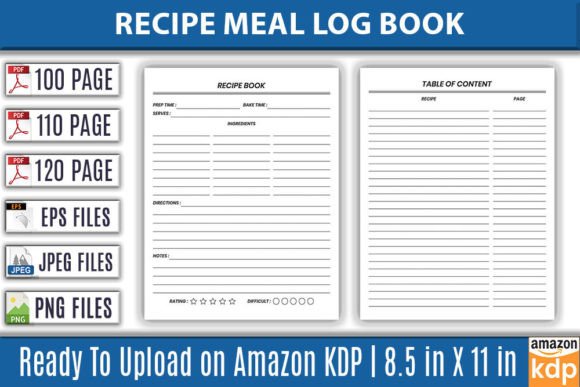
A common trap is focusing only on the page count and trim size, while glossing over the technical specifications that ensure print quality. You might find a template advertised as "KDP ready," but if it's not built with the correct bleed settings or at a low resolution, your final printed book will have misaligned edges or fuzzy text. The Recipe Meal Planner Log Book KDP Interior explicitly addresses these pitfalls by being KDP tested, with a trim size of 8.5×11 inches, a high-quality 300 DPI resolution, and no bleed settings—perfect for standard interiors.
Why does this matter? Amazon KDP has strict requirements. Uploading a file with an incorrect bleed (where images or color extend beyond the page edge) for a no-bleed book will result in a failed review or a poorly printed product. Using 300 DPI ensures all your text, lines, and graphical elements are sharp. Before using any interior file, always verify these specs match KDP's guidelines for your chosen book type. This package removes that guesswork.
The Hidden Cost of Not Having Editable Source Files
Many downloadable templates only provide a flat PDF. While this might be fine if you never want to change anything, it's a significant limitation for personalization. Imagine wanting to adjust the font, add a section for dietary notes, or change the color scheme of the weekly planner. With just a PDF, you're stuck. A superior approach is to secure the original editable files.
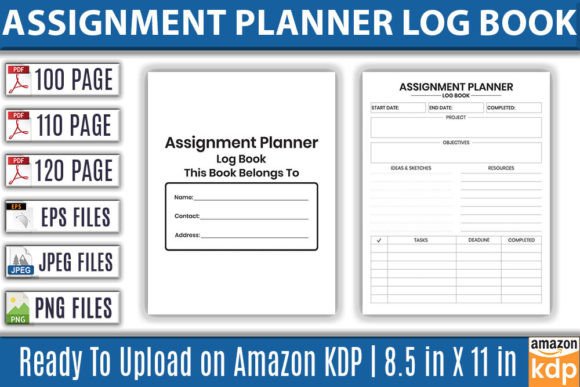
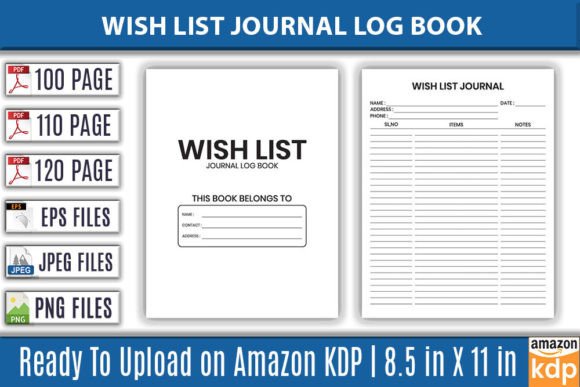
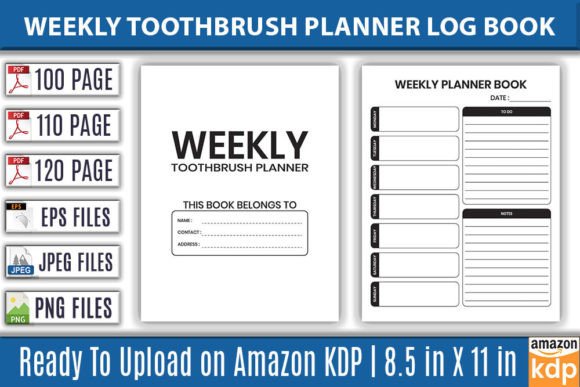
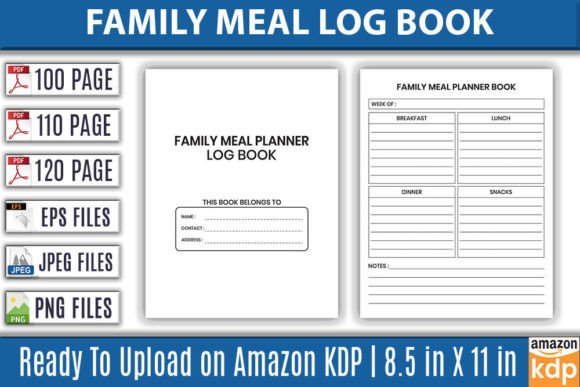
The inclusion of Editable Original EPS Files in this interior package is a crucial feature often overlooked. EPS files can be opened in professional vector design software like Adobe Illustrator, allowing you to modify every element. This means you can truly customize the log book to fit a specific niche—like a keto diet planner or a family meal organizer—without starting from scratch. Before committing to a template, check if editable source files are included. If they are, it vastly increases the long-term value and flexibility of your purchase.
Assuming All Page Counts Are Equally Functional
Seeing options for 100, 110, and 120 pages might lead you to simply pick the highest number, thinking "more is better." However, the functionality and layout of those pages are what truly count. A 120-page log book stuffed with poorly designed, cramped pages is less usable than a 100-page version with a clean, logical flow that includes ample space for writing recipes, planning weekly meals, and logging grocery lists.
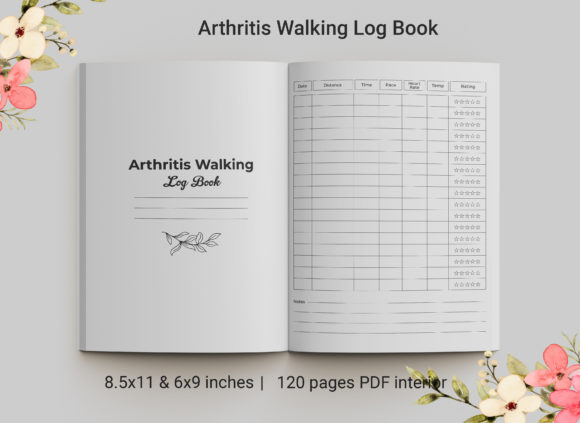
The key is to evaluate the sample pages or a full preview. Look for a balanced structure: dedicated recipe pages with clear fields for ingredients and instructions, a weekly planner with enough room for seven days, and perhaps supplementary pages for pantry inventory or cooking notes. The provided Print PDF file allows you to review this layout instantly. Choose the page count based on the depth of features you need, not just the number.
Neglecting the Value of Bonus File Formats
When you're focused on the main print PDF, it's easy to dismiss the additional files as irrelevant extras. This is a mistake. The Transparent Background PNG and High-Resolution JPG Files included as bonuses serve important secondary purposes. PNG files with transparent backgrounds are perfect for marketing. You can easily extract individual page designs or graphical elements to use in your Amazon listing images, social media promotions, or website without a white box behind them.
The high-resolution JPGs provide another quick-view format and can be useful for certain digital applications or creating sample previews. Having multiple file formats gives you adaptability for both print production and digital marketing, a comprehensive toolkit that supports the entire lifecycle of your product, from creation to sales.
Forging Ahead Without KDP Testing Verification
One of the most stressful parts of publishing on KDP is the upload and review process. You finalize your files, upload them, and then wait, hoping they pass Amazon's automated checks. Using an interior that hasn't been actually tested on the platform introduces risk. You might encounter unexpected errors regarding margins, page size, or file type.
The statement "KDP tested" means the files have already been run through this process successfully. This saves you time, anxiety, and potential last-minute reformatting work. It’s a sign of a product designed with real-world publishing experience. Always prioritize resources that have been vetted on the platform you intend to use.
In essence, selecting a Recipe Meal Planner Log Book KDP Interior like this one is about making a strategic choice to invest in a verified, professional starting point. It corrects the common errors of using untested, low-quality, or non-editable templates. By providing the correct technical specs, editable source files, functional layouts, and bonus assets, it empowers you to create a high-quality product efficiently, whether you're a beginner crafting a personal journal or an entrepreneur building a business selling planners. Your effort then focuses on the content and customization, not the daunting technical groundwork.